
Vivaneau doré (Golden African snapper)
Lutjanus fulgens (Valenciennes, 1830)
Family Lutjanidae • the snapper with golden reflections
2 look-alikes to know
| French name | Vivaneau doré. Other names: carpe-rouge, vivaneau éclatant, golden African snapper. |
|---|---|
| Scientific name | Lutjanus fulgens (Valenciennes, 1830) |
| Family | Family Lutjanidae |
| English name (FAO) | Vivaneau doré (Golden African snapper) |
| Local names | On Ivorian markets and landing sites: “Carpe-rouge” (Ouattara et al., 2016). |
| Habitat | Marine, coastal demersal over hard and soft bottoms of the shelf. A coastal species. |
| IUCN status | LC Least Concern. Exploited by West African coastal fisheries. |
Identification
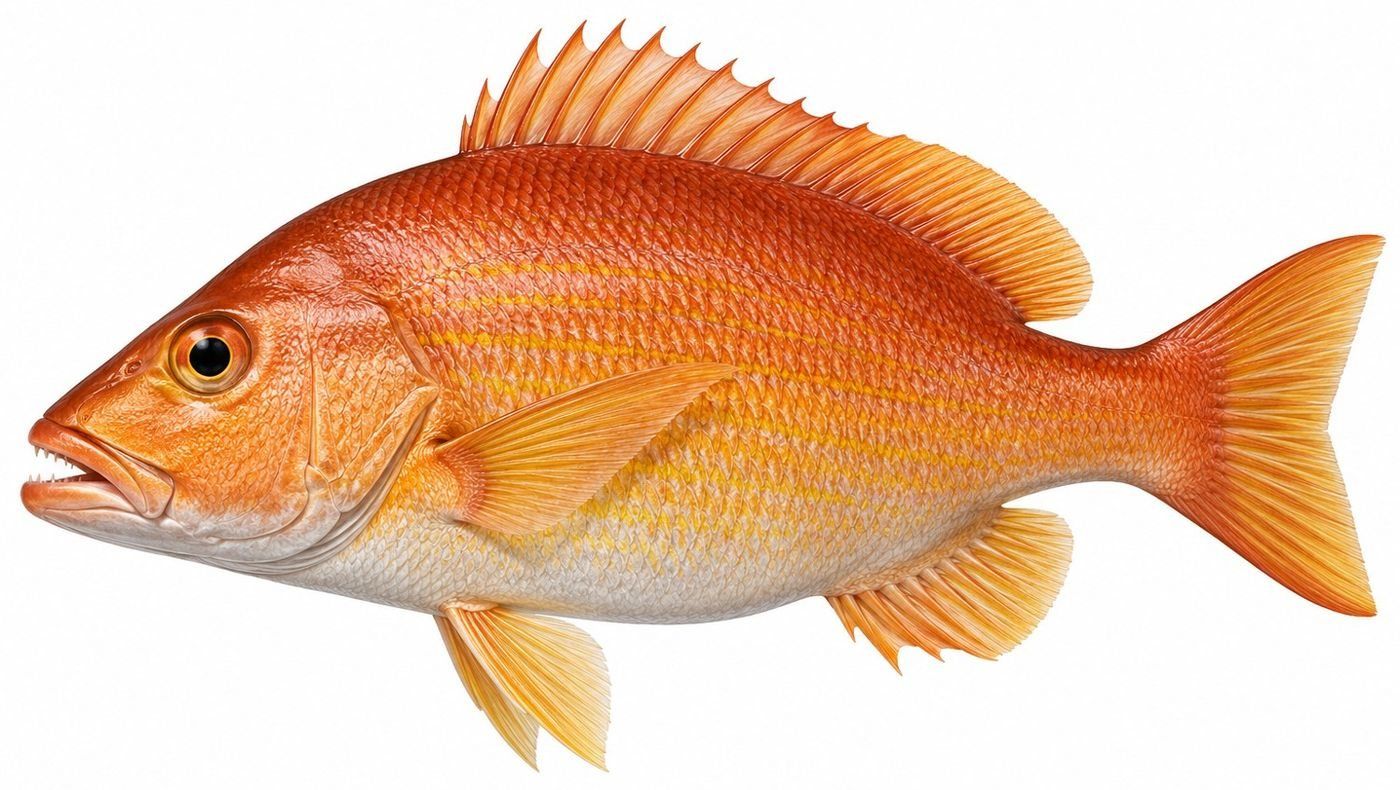
A medium-sized snapper with a pinkish to reddish body, its flanks shot with golden reflections, hence its name. Pointed snout, classic lutjanid profile. Smaller and paler than the large wreck snappers. Described from Gorée in Senegal.
Features that never mislead
Characteristic golden reflections on the pinkish flanks.
Medium size, smaller than the African brown snapper and the African red snapper.
Pointed snout, classic snapper profile.
Uniform pinkish to reddish livery.
Size and weight
A medium-sized snapper. Precise maximum length to be confirmed on FishBase, in the order of a few decimetres. On the Ivorian coast, typical catches are of moderate weight.
Behaviour and ecology
A coastal demersal predator that hunts small fish and crustaceans on the shelf bottoms. Less tied to large structures than its giant cousins.
Present on the West African coast, described from Gorée. Caught along the Ivorian coast in bottom fishing. IUCN status: Least Concern.
Reproduction and season
Coastal spawning, pelagic eggs and larvae. Local spawning data to be documented.
Fishing practice
Techniques, from most to least effective
Bottom fishing with natural bait over coastal grounds.
Handline and tataki fishing.
With a soft lure close to the bottom near reliefs.
The fight: lively and sustained, typical of snappers but without the brutality of the giants. A good bottom fish on medium line.
Eating quality
Fine white flesh, appreciated like that of all snappers. Excellent grilled, braised or baked. Good value on the markets.
Sources: FishBase (Lutjanus fulgens, Valenciennes 1830); IUCN Red List, LC; FAO Eastern Central Atlantic; Ouattara et al. 2016.