Rig · Expert
Coastal trolling
Lures swim behind the boat at 4 to 6 knots; in an hour you cover what a caster explores in a day.
| Level | Expert |
|---|---|
| Habitat | Coast, drop-offs, wrecks |
| Target fish | 5 species |
| Knots used | The Albright knot, FG knot, The Palomar knot |
Tackle and starting setup
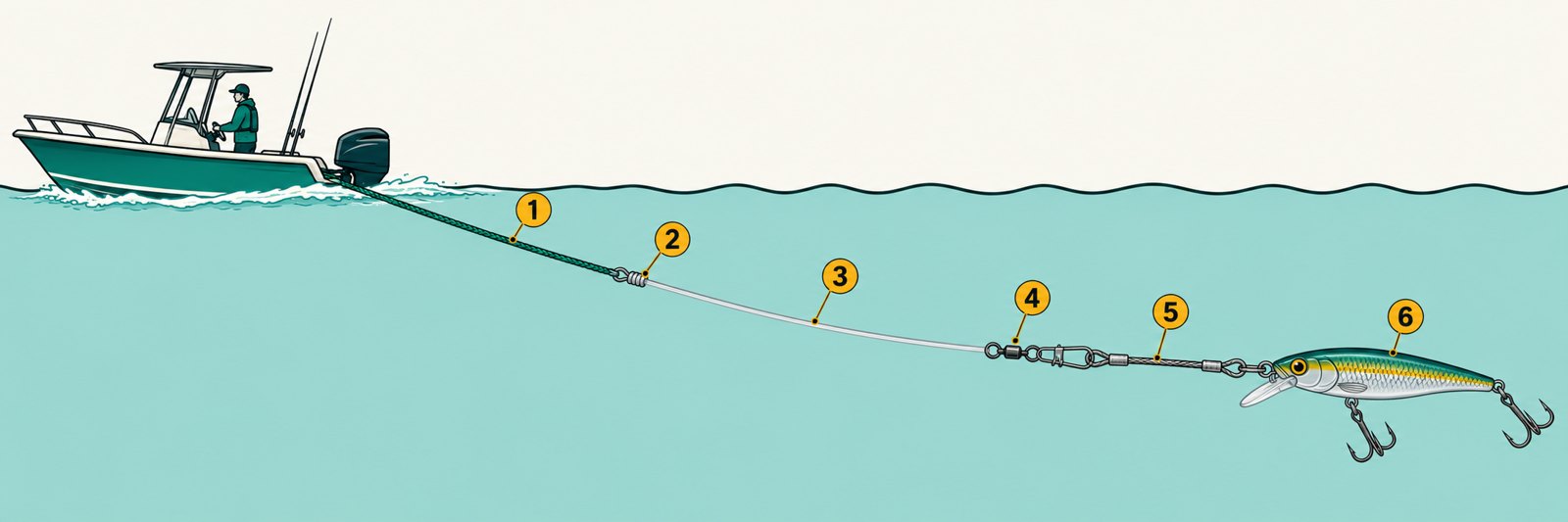
Outfits of 20 to 30 lb; fluorocarbon leader 80 to 100 lb; steel as soon as Spanish mackerels are about; diving crankbaits and spoons (V13, Part III, chapter 4). Spanish mackerel: 1.5 m leader, 30 cm wire trace, minnow 18 to 22 cm (species sheet 8).
The rig step by step
- Rig each rod: braid, join, fluorocarbon, snap swivel, steel, lure
- Put the lures in the water one by one, checking how they swim
- Stagger the distances to avoid tangles
- Follow drop-offs, points, wrecks and changes in water colour
Bait: Lures: crankbaits, wobbling spoons, skirts.
Setting and technique: On the strike, the boat keeps going for a few seconds, then everything is cleared away.
Which fish
The knots in this rig
Matching baits
None for now.